Race murder victims and chicken rescuers spied on, raped by the UK Stasi, Sex Lies and Spies, Unrepentant, Spycop Andy Coles ‘Davey’ – Prime Minister no longer has any say! Dominic Cummings on failures of the system of appointing senior civil servants which is now all done by the Cabinet Secretary – John Kiriakou Mossad intimidation of UK/US spies/diplomats teaching them to obay Israel’s genocidal Mafia – The Bristol Politics Show, presented by Tony Gosling
MP3 of Friday 23rd October 2026 show [right click to download] (from c. 11pm) This week’s full interview mp3s, bottom of page. SHOW STARTS 17:00 London time FOR c. 4 HRS TO c. 20:50 – OUR LIVE STREAM to Listen live online. Alt. live stream, DJ Plug Radio OR Download Show After Transmission HERE. Repeats 11 & 5 AM & PM daily on our stream
Download NOT THE BCFM POLITICS SHOW APP [ANDROID APP (1)] and [APKPURE (2)] – or the [Apple App store] – PS. You can replace evil Google Play, which effectively banned us, with [the Aurora store]
All time low: 31% trust the UK Press – UK media oligopoly TONY’S BOOKS: Bilderberg.org – 2 PAPER–BACKS – TONY’S CHANNELS: Telegram – Bitchute – 911 forum – Radio4All – The Land Is Ours – VK – Twitter/X – Farcebook – Brighteon – Rumble – RT Live on Rumble – Goebbelsesque YouTube: This show; Public Enquiry; Peter Borenius; i-Contact & Occult Geopolitics
Radio4All mp3 audio files usually available from 23:00 2-4hrs, after TX – we’ll credit you if you rebroadcast. Any probs. mp3s should be on alternative links below by then
Part One – Local and National News Review
We’re told to have 3 days supplies – getting us ready for war? Every Briton should stockpile water and food supplies, government advises Be Ready campaign aims to prepare UK for impact of climate crisis, technological dependency and threats by hostile state Every Briton is being urged to stock up to nine litres of bottled water and three days’ worth of food in new government guidance designed to ensure that households can survive a weather, cyber or other serious emergency. The Be Ready campaign is aimed at persuading people to stock up with supplies to last 72 hours, amid growing official concern about the impact of the climate crisis, technological dependency and hostile state threats. Dan Jarvis, the security minister, said that “those who can follow this advice should follow this advice”. It amounted to “simple steps to be ready for everyday emergencies” as part of a wider, community-oriented effort “to improve our resilience as a nation”, he said. Wes Streeting, the defence secretary, added that Britain also needed to prepare for the threat of “state-sponsored terrorism” by Russia or other hostile powers targeting everyday infrastructure. A grey destroyer warship with a red dragon painted on the front guided by tug boats in the sea Royal Navy lacks resources to counter Russian threat in high north, MPs warn Read more “Terms like ‘hybrid warfare’ and ‘grey zone threats’ do not accurately capture or convey to the general public what I prefer to describe as ‘state-sponsored terrorism’,” he said. “So in the face of those threats, which are not hypothetical but real, and not somewhere else but increasingly here, we have to step up and take seriously our national resilience as well as our national defence…
Al Jazeera – French protests. Yellow Vest’s manifesto was ignored before – needs not met. What’s behind French student protests that turned violent? The school protests coincide with public sector strikes over planned budget cuts.
Right wing TV station destroyed. France history of protest. Black block – agent provocateurs.The school protests coincide with public sector strikes over planned budget cuts. You decide: French Black Bloc anarchists, or undercover police lobbing flashbangs or tear gas grenades in Metz on Saturday? Who wants this State of Emergency? Obviously not just Elon Musk! No mention anywhere on the news. No mention by Macron or the French PM.
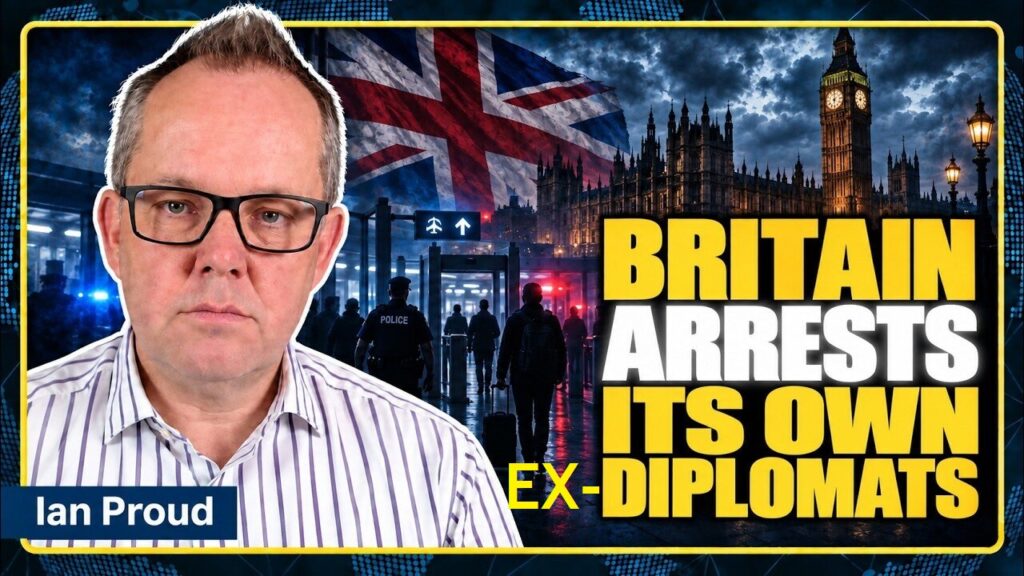
Ian Proud, Peacemonger, interviews Jacques Baud about French protests. Ordo liberalism and banking. Jacques Baud on EU foreign policy encouraging far right. Nord Steam 2 pipeline destruction reason for energy crisis. EU collapse? The Precariat – Elon Musk.
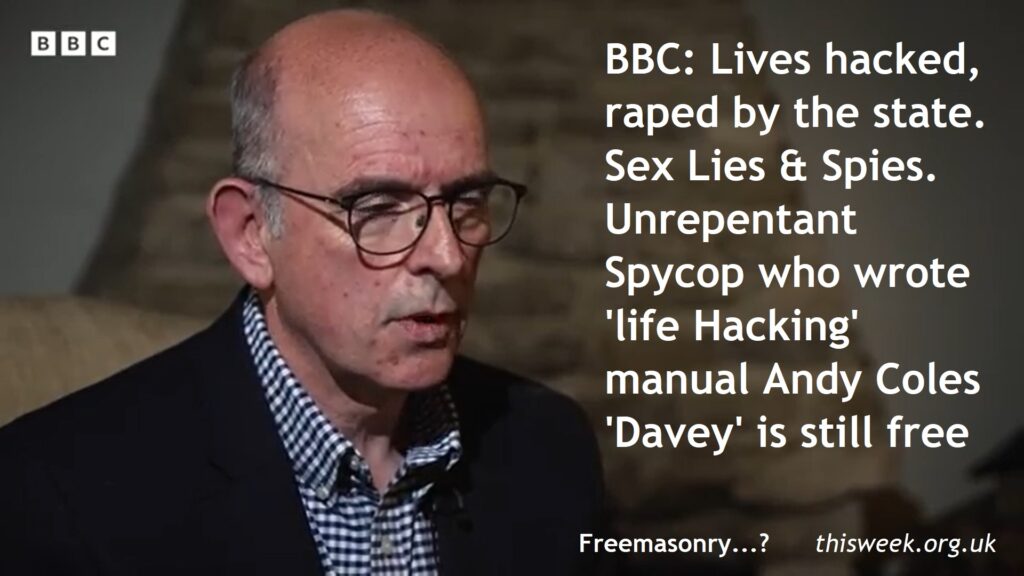 BBC can be good compared to other mainstream news. BBC documentary ‘Sex, Lies and Spies’ – Andy Davey spy cop revealed by brother. Secret services in charge. For decades, undercover police officers infiltrated protest movements, using false identities and gathering intelligence. One of them was Andy Coles. In his first major interview on the subject, he denies having a sexual relationship in the 1990s with Jessica who was then a teenage animal rights activist. Jessica says he groomed her and abused his power. But who is telling the truth? Sex, lies and police spies: The disputed story of the ‘creepy’ undercover officer Andrew Coles sings in a church choir, is active in local Conservative politics and was once an undercover Metropolitan Police officer – a so-called “spy cop”. Jessica – not her real name – is an animal rights activist who says he deceived her into sleeping with him. This is a story about sex and lies. But who is telling the truth? Coles, 66, lives in a thatched cottage in the Cambridgeshire countryside with his wife and their greyhound. He is the brother of broadcaster the Reverend Richard Coles. But between 1990 and 1995, he served in the Metropolitan Police Service’s (MPS) undercover Special Demonstration Squad (SDS), which infiltrated political and protest groups. For the past decade, its activities have been probed by the Undercover Policing Inquiry (UCPI), external. “The MPS has accepted that Andrew Coles had a sexual relationship with Jessica,” wrote the force’s commissioner, Sir Mark Rowley, “and is disappointed he did not tell the truth to the inquiry.” Coles is also accused of appearing to advise colleagues to have similar relationships. He denies the claims against him, insisting he is the victim of a deceit. “It’s payback, pure and simple,” he says. Andrew Coles, pictured with Tory leader Kemi Badenoch, is a former councillor and president of Peterborough Conservative Association Speaking exclusively to the BBC, Coles lists resilience, bravery and ruthlessness as the qualities needed in a good undercover police officer. A skill for deception? “I suppose so,” he says. “Though I didn’t behave very differently to my own personality.” Coles’s current life is a far cry from his covert past when, he says, he sometimes had to break the law to gain trust and maintain his cover. “I took drugs – cannabis. It was necessary – you had to be vouched for,” he says. “I was given a lemon squeezy bottle, allegedly full of acid, and squirted it over a butcher’s shop window. “I was also involved in a raid on a chicken farm when some chickens were stolen and damage was done to the property.”…
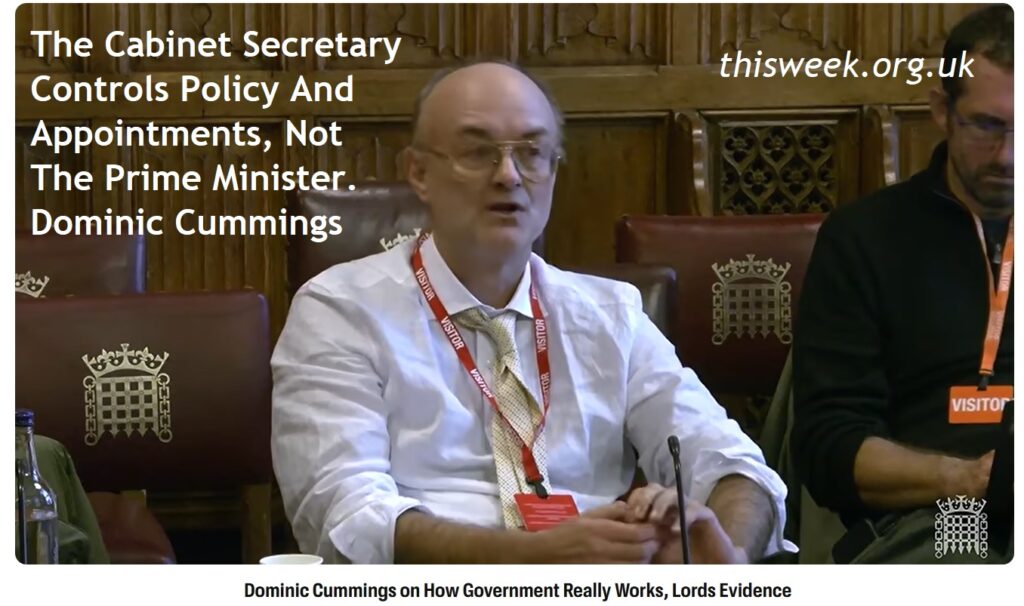 Dominic Cummings on failures of the system of appointing senior civil servants whic is done by the Cabinet Secretary. Right wing anti government view? Burnham not answering questions at press conferences. The Cabinet Office has become key in political decision-making says former senior adviser Dominic Cummings. Cummings gave evidence to the Lords Constitution Committee on the UK’s constitutional safeguards on Wednesday, saying “In 2020, I did not attend a single cabinet meeting. “The reason is because, other than at very odd, peculiar times now of political stress, essentially, cabinet has become an irrelevance, and the actual important meetings that decide what’s going on are 50 metres away in the Cabinet Office.” The former senior adviser under former prime minister Boris Johnson left his role in November 2020. Number one was civil service appointments should shift from closed by default to open by default. That sounds like a small thing, but it’s actually a huge thing. Going back to the whole point about the North Travelian system, since then, for over 150 years, you’ve had a system which has morphed slowly into a closed cast system in which buggins promotes buggin internally. And that’s why you have for example completely non-technical people put in charge of deeply technical programs inside GCHQ or whatever in a way that would produce completely no one would everyone would think that we completely lost our minds if you showed someone from 1810 this kind of thing. If you change the default mode of the civil service from closed by default to open by default, then you’re you can do that without h tearing up the entire old north control system and without also like massive legal changes. I think you should tear up the old north control system. I think you should do major constitutional changes of primary legislation. But my point is because of the flexibility of how the system works, you can actually do things. The prime minister now as minister for the civil service working with the cabinet secretary, if they agree, can just do very radical things now with appointments that could have a dramatic effect today. Of course, as soon as I was out the door, all of that was immediately um binned and nothing nothing went ahead. Secondly, again going back to what I said about the cabinet office and its historical evolution, the cabinet office, the cabinet secretary now controls all the permanent secretary appointments. And if you speak to the cabinet secretary and say, how are these people performance managed? What how are their priorities set or whatnot? Essentially a black box from everybody who’s elected from the perspective of everybody who’s elected. No secretary of state has any input into it and the prime minister doesn’t have any kind of formal role. It’s sort of a whiskey with the capsac in the capsac’s office in the permsac the end of the year and then they dish out some bonus on the QT according to the ideas that they’ve got themselves. So another obvious thing to do is for the prime minister’s office to say the prime minister’s office is going to play a central role in the performance management of the permanent secretaries. Bearing in mind that the prime minister working through the cabinet secretary can actually replace these people….
Shirley Williams, former Minister of Prices and Consumer Protection, on why subsidies work. Dominic Cummings against supporting Ukraine in war. Farage critical of UK support for the Ukraine war.
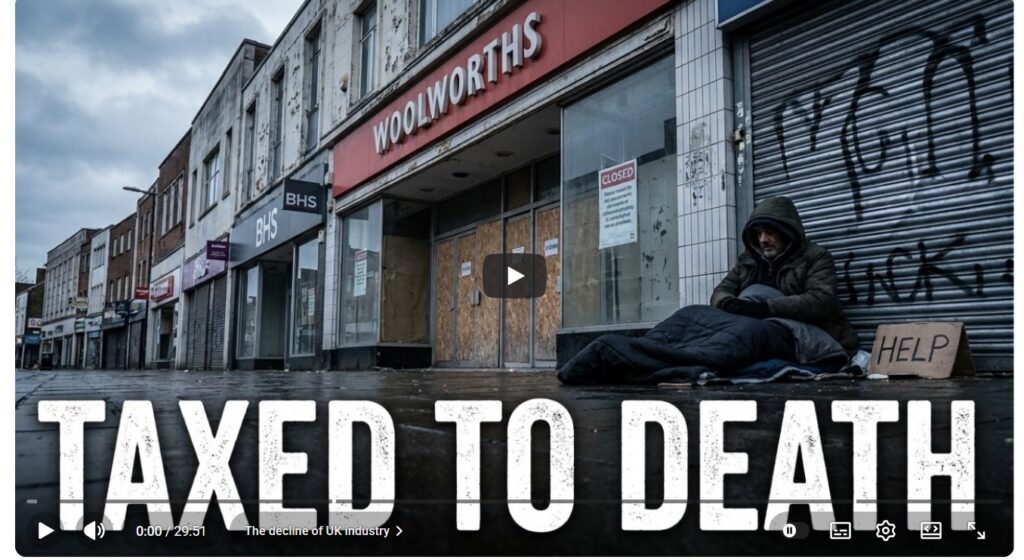 Andy Roberts, Fine Print – in work on benefits. Thomas Picketty book, Capitalism in the 21st Century. The UK Can’t Afford To Work Fine Print with Andy Roberts – The UK Online Safety Act is effectively ending anonymous browsing. We trace how new rules will impact your digital privacy. The legislative push for Ofcom age verification has created a massive regulatory headache, forcing platforms to hoard user data just to prove compliance. What started as a plan to protect children has morphed into a mandatory infrastructure for tracking every citizen online, with recent House of Lords records confirming that VPN prohibition is firmly on the table. This investigation examines how the normalization of data surveillance has become a requirement for accessing the web. By analyzing the recent Reddit fine and the surge in VPN usage, we explain why the government’s approach to internet regulation is failing, and how the infrastructure built to enforce these rules is now being quietly sold to the highest bidder.
BBC – no protective ring around care homes at beginning of Covid, and cruel lockdowns. Indian New Delhi Institute of Virology study – Covid a manufactured virus. Ivermectin not allowed.
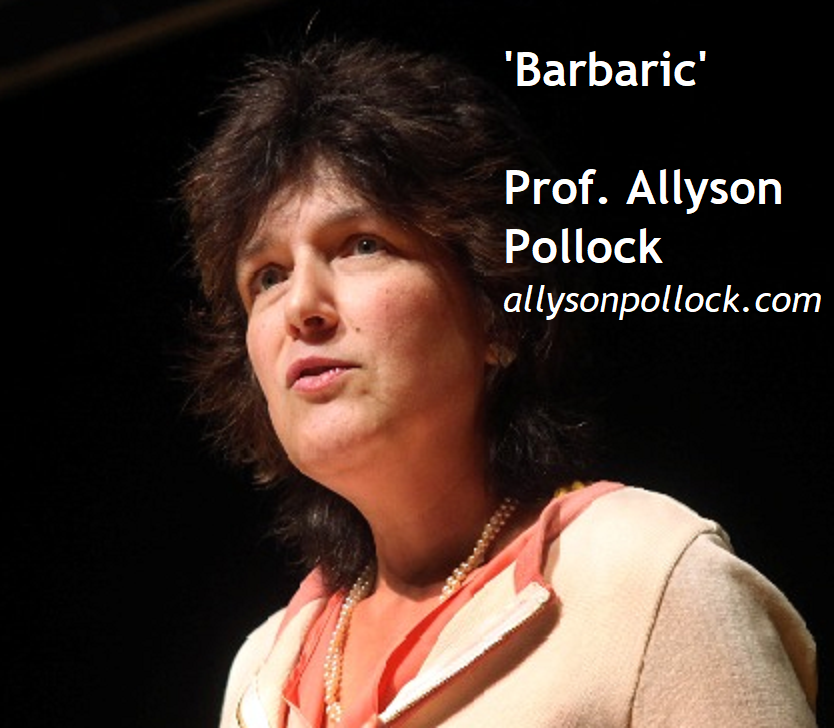 Professor Allyson Pollock – how Covid could have been dealt with better, and relevant experts should have been listened to, taking politics out – privatised NHS – Keep Our NHS Public. Private enterprise is corroding and penetrating the fabric of the NHS at every level’ Allyson Pollock, Clinical Professor of Public Health at Newcastle University,US health care, is taking shape in the UK Professor Allyson Pollock wrote in her 2006 book: NHS plc: The Privatisation of Our Healthcare, that: “The permeation of NHS management and hospitals and health authority boards by business is emblematic of the way in which private enterprise is penetrating and corroding the fabric of the NHS at every level.” Given the recent disclosure by the news group Belfast Live that revealed a dramatic increase in the amount of public money being channelled to private healthcare providers across Northern Ireland since 2020. In the five financial years between April 2020 and April 2025, the combined total spend on private healthcare appointments by the Health and Social Care Trusts in Northern Ireland totalled at least £302,203,303, I was keen to get Professor Pollock’s views on this. “Northern Ireland and England have gone down the same route of outsourcing, largely elective surgery and diagnostics. So that’s NHS-funded care in the private sector, whereas Scotland decided, after a bit of an abortive start in 2003, to actually reverse the decision to privatise and outsource. It’s actually continued to try and build capacity in its own NHS. “So while, of course, you do increase capacity, what happens is that the private sector ends up cherry-picking because they can’t provide the same level of services the NHS, they can’t provide intensive care units and intensive care beds. So they cherry pick the healthier and wealthier patients and leave the poor ones behind in the NHS. “But overall, waiting times have been rising for everybody, Inequalities are rising because the capacity in the NHS to treat is shrinking. “There’s fewer beds being used for elective surgery so people who are poorer and less healthy are waiting longer. “That’s quite shocking. There’s another issue here, which is readmissions. So readmissions are very common after hip and knee surgery and cataract surgery, but it’s about five per cent of all admissions are readmitted. And of course, those readmissions don’t go back into the private sector. They have their surgery in the private sector, and then they’re returned into the NHS….
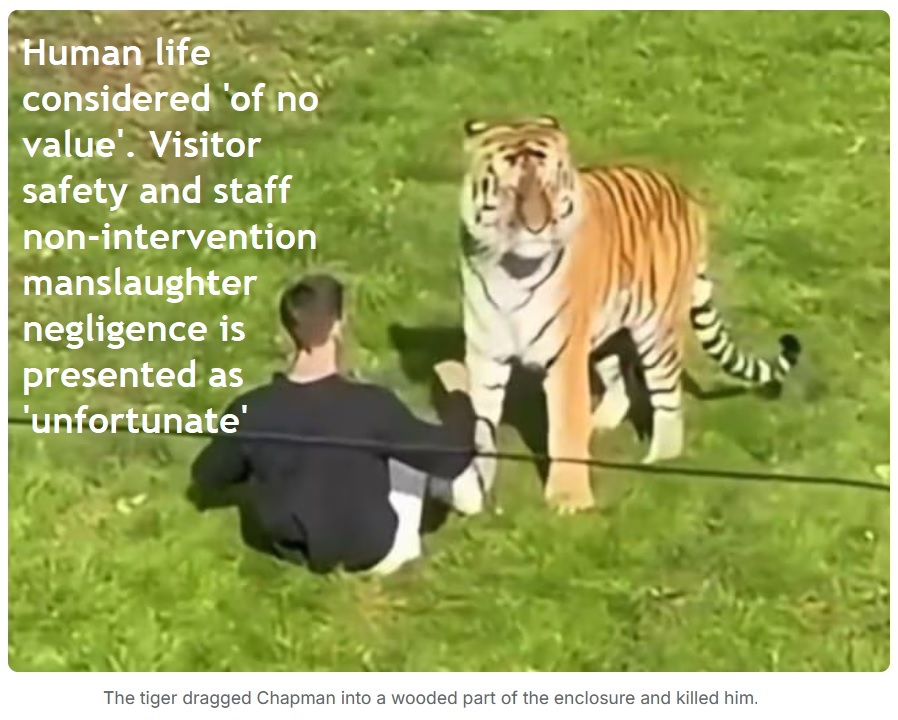 William Chapman death by Tiger – were his natural inhibitions squashed by strong psychiatric drugs? Marcus therapist for 30 years on psychiatric drugs ‘these feeling numbing drugs block fear but also joy and love, and with that goes all their empathy’. Critical Psychiatry group of concerned psychiatrists who’ve seen damaging effects of psychiatric drugs – Joanna Moncrieff a leading figure. British Family Breaks Silence On William Chapman’s Heartbreaking Mental Health Struggles After Tragic Tiger Enclosure Incident The family of William Chapman, who died after entering a tiger enclosure at Yorkshire Wildlife Park, has paid tribute to him, describing him as “bright, warm and engaging”. William, who was in his mid-20s, died on Saturday, October 10, after entering the enclosure at the wildlife park near Doncaster. He was attacked by an Amur tiger and was pronounced dead at the scene despite the efforts of emergency services. In a heartbreaking statement, his family revealed that William had experienced significant mental illness over a number of years and had been prescribed strong medication. The family’s tribute has provided further insight into the personal circumstances surrounding the tragedy, as people continue to express their condolences and reflect on the incident. The City of Doncaster Council has launched a health and safety investigation into William’s death. Yorkshire Wildlife Park remains closed while enquiries continue. The tiger, named Altai, was unharmed during the incident, and the park has confirmed the animal will not be euthanised. This remains a deeply distressing tragedy, with thoughts and condolences continuing to be shared for William’s family and loved ones.
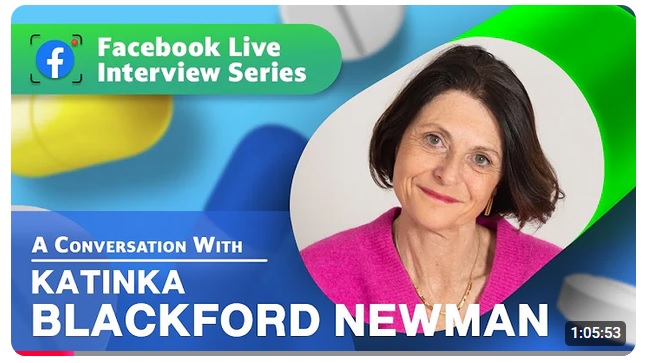 Katinka Blackford on the Panorama film she made about the dangers of psychiatric drugs, having experienced it herself Katinka Blackford Newman: Antidepressant Risks Medicating Normal To watch Medicating Normal, visit https://medicatingnormal.com To contact Katinka Blackford Newman or to submit your story, visit https://AntidepressantRisks.org Katinka Blackford Newman is an award winning BBC trained documentary film-maker who lives in London. Her interest in antidepressants began in 2012 when she nearly lost her life because of an adverse reaction to an antidepressant. She was hospitalised and prescribed more drugs which made her extremely ill. After a year she was lucky to be taken off all the drugs and made a full recovery. She researched the side effects of antidepressants and interviewed some of the world’s leading experts. Her best-selling book ‘The Pill That Steals Lives’ has been featured on Radio 5 Live, BBC London, Good Morning Britain, the Victoria Derbyshire Show and in The Times, The Sunday Times, The Daily Mail and The British Journal of Psychiatry. In 2017 her research was made into a BBC Panorama programme ‘A Prescription for Murder’ which investigated whether an antidepressant could be the cause of one of the worst mass killings of this century. This year she co-founded a not for profit organisation to highlight the dangers of antidepressants. Antidepressantrisks.org is run by a team of experts including Professor David Healy, and people who have had first hand experience of antidepressants. In the Stolen Lives section it allows people to tell their stories in their own words. I think the most different drugs on at one time was was eight I think but anyway I was normal and medicated and I can tell you I became very abnormal for a year and it nearly cost me my life and um and since then like you I’ve been um motivated to help people understand that these drugs can be helpful to some but to others they can be very dangerous they carry risks yeah so can you share a little bit about your personal story of why you started to take an pressent you know kind of take us through your story that eventually led to the book sure sure so in 2012 um my marriage uh fell apart my 12E marriage fell apart I had uh two young children Lily and Oscar who were I think they were about 10 and 11 at the time and I C quite well um but in fact I co very well but a few months later it became apparent that we were going to have to sell the family home and I’d always thought that uh me and the kids would stay there and it was very traumatic for me that we were going to have to move out of the neighborhood so I uh I was working full-time as a film director and I had some sleeping tablets that I’ve been prescribed for jet lag I couldn’t sleep and I stupidly actually uh started taking sleeping tablets um and I took them for a few nights it wasn’t really helping and I went to the doctor because I wanted to get some uh some more sleeping pearls he wouldn’t give me any more sleeping pills and I was prescribed an anti-depressant I didn’t really think anything of it at the time I thought it would calm me down help me to sleep uh I at no point did I think that think about the side effects I probably didn’t even read the leaflet but anyway I took uh the anti-depressant which was um esal pram uh Lexapro I think is the generic name um and within hours i’ I started looking back I started having an adverse reaction I started having athesia I’m sure that most of your listeners will know what akathesia is for those you don’t it’s an acute inner restlessness I couldn’t um I couldn’t sit still uh and I and I kind of like lost the sort of lost the plot um but I think I must have taken a second tablet possibly a third it’s all a little bit hazy but anyway by I still by I I had two nights of not sleeping at all and so um by the Saturday I took the antidepressant on the Thursday on the Saturday I went into a full-blown psychosis um and I cannot begin to describe how terrifying that was anybody who’s experienced an anti-depressant induced psychosis my goodness it was literally I thought I’d killed the children everything was brightly um everything was in bright um everything was brightly colored.
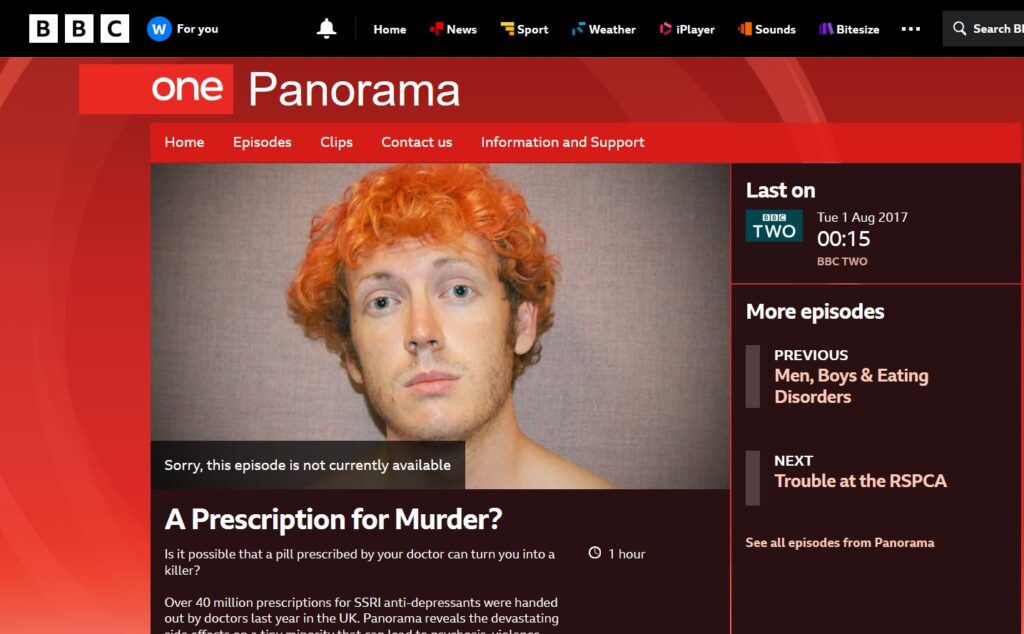 CAN ANYONE PLEASE FIND AND UPLOAD THIS DOCUMENTARY? A Prescription for Murder? Panorama Is it possible that a pill prescribed by your doctor can turn you into a killer? Over 40 million prescriptions for SSRI anti-depressants were handed out by doctors last year in the UK. Panorama reveals the devastating side effects on a tiny minority that can lead to psychosis, violence, possibly even murder. With exclusive access to psychiatric reports, court footage and drug company data, reporter Shelley Jofre investigates the mass killings at the 2012 midnight premiere of a Batman movie in Aurora, Colorado. Twenty-four-year-old PhD student James Holmes, who had no record of violence or gun ownership, murdered 12 and injured 70. Did the SSRI anti-depressant he had been prescribed play a part in the killings? Panorama has uncovered other cases of murder and extreme violence which could be linked to psychosis developed after the taking of SSRIs – including a father who strangled his 11-year-old son. Panorama asks if enough is known about this rare side effect, and if doctors are unwittingly prescribing what could be a prescription for murder.
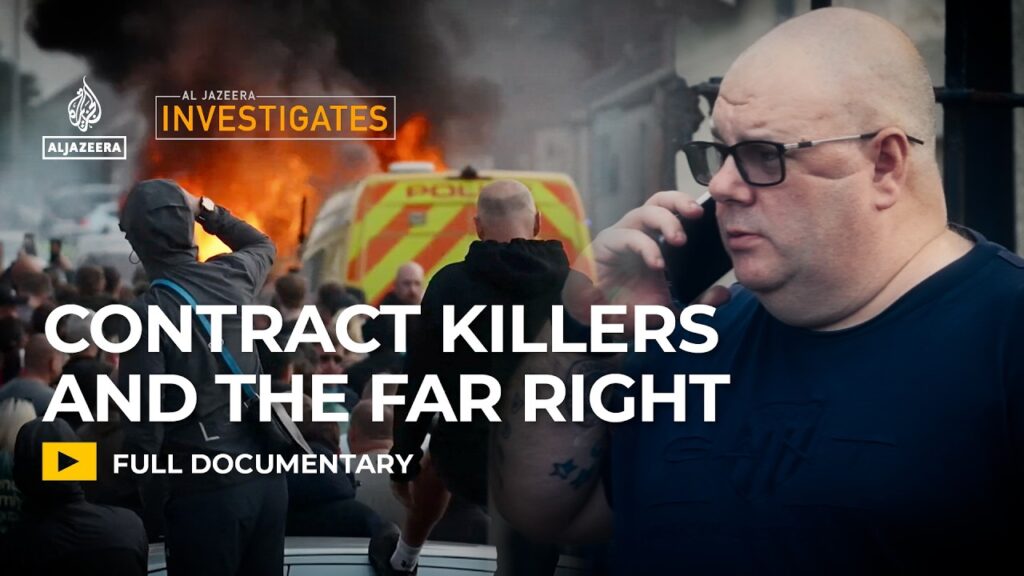 #RARE-REAL-DOCUMENTARY: Al Jazeera documentary – far right hit men linked to Turning Point UK right wing campaign group, and seen with Kemi Badenoch. Murder For Hire & The UK’s Far Right | Al Jazeera Investigates Al Jazeera English This Al Jazeera Investigation exposes the dangerous links between the right-wing student movement Turning Point UK (TPUK), which has organised and participated in anti-immigrant protests in the UK, and a member of a paramilitary group who can arrange murders for money. An undercover team of journalists investigated the secret network of right-wing activists and far-right groups accused of fueling the violent anti-migrant protests on Britain’s streets. Turning Point UK is an independent offshoot of the powerful right-wing US political activism group Turning Point USA. TPUK’s leader is revealed to have links to the UK Conservative Party and Reform Party, and is secretly filmed arranging a fake political rally with members of the British far right and brokering an extraordinary murder for hire plot. The team exposes the links between culture war activists and members of the Northern Irish loyalist group the UVF, which is proscribed by Britain as a terrorist organisation.
Telegraph: Camilla Wears The Trousers | Nazis developed/tested nuclear weapons | MK ULTRA brainwashed assassins Nazi origin | Are Zionists discriminated against? | Israel behind the 7/7 London Bombings: Tony Gosling’s documentary, and article | Videos of full shows | Economic essentials: Michael Hudson | Blackrock/Vanguard | Why/how Israel Assassinated JFK & RFK | NATO false flag attacks: Operation Gladio | Tony on Brexit & (4th Reich) Traitors of Arnhem | Creation vs. Evolution | God vs. Lucifer | ‘Great Plan’ for 3 World Wars | Devil Worship: The Rise Of Satanism | Nuclear Armed IDF Doomsday Cult | Aanirfan | Armageddonists I have known: Nick Land (1976-8) | George Monbiot (1995-7) | Manna for the Revelation Generation: CONSPIRACY CLASSICS, longer interviews/lectures
Part Two – International news review, Accelerationist, Armageddonist reports and investigations
John Kiriakou, author, on his experiences of Mossad’s horrible practices intimidating secret intelligence services of the UK and USA – how they do it . Rabbis against Netanyahu’s violent practices.
Israeli elections next Tuesday. How Many Israelis Were Killed BY ISRAEL on OctoberMehdi Hasan on October 7th. Haaretz reporting – Likud posters that lie, Netanyahu over to Crypto to avoid sanctions. NAZA film. Israelis brain washed. Armageddon?
 US MASS SURVEILLANCE WARNINGS FROM TULSI Hustings in Israel – all Parties don’t want a Palestinian state. Tulsi Gabbard on NSA collecting data and war eroding rights – Flock cameras. My Message To All Americans Tulsi Gabbard’s powerful message at the Texas Youth Summit, warning about threats to our freedom, constitutional rights, privacy, and the future of our republic. She calls on the next generation of Americans to stand up, speak out, hold leaders accountable, and defend the freedoms that make America great.
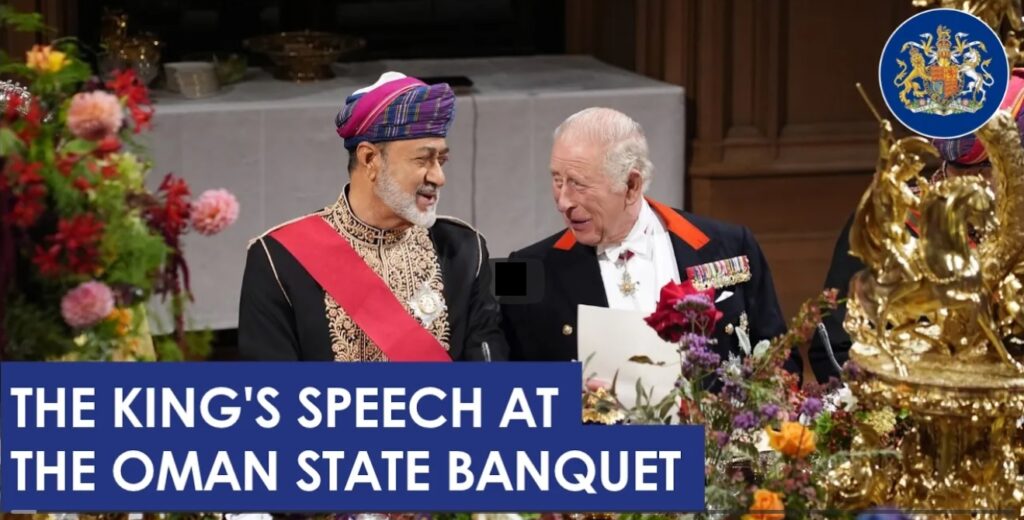 Saudi Arabia and the other Gulf States are wondering if they are about to be sacrificed in a mad cop WWIII scheme in the Middle East. So they come back home to be reassured by ‘Mummy’ state the UK which created them in the post WWI Sykes-Picot agreement . King Charles throws lavish banquet for the Sultan of Oman.Welcoming you welcoming you back to Windsor Castle this evening. Oman is one of the um of Britain’s oldest allies. And after all these years, I pray one of your closest friends. And from this privileged position, we recognize that a thousand years before our countrymen first met, a millennium before there was even a United Kingdom, uh, Omani mariners were already trading across the Indian Ocean to extend Oman’s great frankincense trails. which had already stretched across Mesopotamia and the Mediterranean for a thousand years before that and indeed a thousand years before that. This does, I must say, put some of our own claims to seafaring prowess into true perspective. So from Britain’s very first meetings with these renowned Omani merchants, our friendship grew from the sea as maritime partners in the 17th century, treaty partners in the 18th, strategic partners in the 19th, brothers in arms in the 20th, and today in the 21st century, we are bonded by diplomacy. defense, trade and trust. Oman’s role across the Gulf and her constructed neutrality as you put it matters far beyond hormuz and is worthy of our utmost respect. As the prophet Muhammad said of the character of the people of Oman, The unique and special relationship we share helps to make the world and our people safe. We are all exceptionally proud of the lone service officers who serve in both our nations and we are deeply grateful for the hospitality offered by Oman to our armed forces including that which your majesty’s armed forces association extends to British veterans whose own contribution to man is so important to us all. in your future too. Britain is deeply invested as you are so actively in ours. Our connections matter deeply and in this regard I have been especially delighted to see our sons, Prince of Wales and his highness say the become joint patrons of the Jew of Arabia expedition. Your Majesty, there can be few happier symbols of success than a living relationship being passed from one generation to the next…
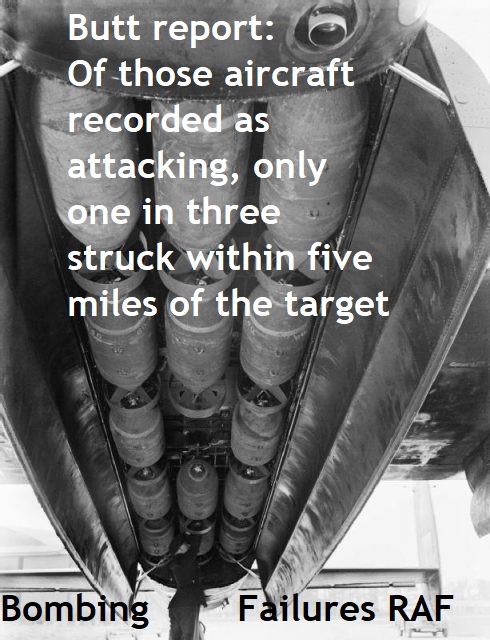
 RAF Bomber Command 1939 to 1945 documentary – with Dr Robin Clifton of Warwick University. Len Deighton book on history of WW2. Blood, Tears and Folly: An Objective Look at World War II is a 1993 book by Len Deighton is a history of World War II from an alternative viewpoint. Deighton looks for the origins of the war, from the rise of the great power conflicts that led to the First World War, through the inter-war years and the histories of the various conflicts and combatants in the years up until the beginning of the war in 1939. He traces the early engagements, the feints, the so-called Phoney War, right through until Japan’s attack on Pearl Harbor in 1941. Deighton attempts to create an encyclopedic introduction to the conflict by building up a detailed background and showing how perilous Britain’s early situation was, the early blunders by Winston Churchill in the Norwegian Campaign and the British dealings with the French that led to the debacle of Dunkirk. Deighton, a skilled thriller writer, does an exemplary job here of deconstructing the strategy and stupidity of WWII from the British POV. A comparable American-centric work is the ‘Army at Dawn’ trilogy. Nations start wars, and their generals plan battles, often based on wishful thinking instead of facts. When confronted by disaster, they often double-down. As the Allies turn the tide and defeat the Nazis, it is often startling that any success could be achieved. This is the epiphany that Deighton’s work sparks. “Blood, Tears and Folly” is, like Deighton’s other notable non-fiction, about warfare, and the Second World War in particular (with some “setting of the scene” going back thirty or more years in European or world history). His central thesis is that, despite the best efforts of some historians, the actual story of the war in its initial stages is one in which the Allies (the Brits in particular) were overconfident in their ability to respond to the German threat, and in turn doomed themselves to being overrun by the Blitzkrieg of early 1940. No one comes off well here, as Deighton seems to take down many of the mythic figures on the Allied side who have since been revered for their military strength or national importance. This includes Churchill, by the way, and coming from Deighton (as British a writer as you’ll ever find), that says a lot. Do I agree with all of Len’s arguments here? Not necessarily, but I find his writing style entertaining, even when discussing horrible things. And there was a lot of horror during the war, from the obvious widespread murder of the Holocaust and Japanese atrocities in China and elsewhere to the less obvious ones. Deighton can be cranky at times, and I don’t dispute his anger at some of the mistakes as he sees them that unfolded. Overall, I think it’s always best to approach any work of narrative history with a healthy skepticism about the author’s ability to tell the story without leaving something out or being guilty of shaping the tale to fit a narrative. So with that caveat in mind, I think it’s fair to suggest this book as a handy one-volume rundown of some of the war’s less heroic moments, with the understanding that it’s all one man’s perspective. Len Deighton was a wonderful writer, whose fiction has come to mean a lot to me as the last few years have gone by. And this book, which I first attempted to read as a weird teenager during the years when the world seemed to finally be at peace, is a helpful reminder that on the world stage, people fuck it up pretty handily from time to time. The Second World War was a global conflict that didn’t have to happen, if Hitler had been more forcefully opposed and if the Allies hadn’t been more wary of Communism than Fascism. And it could have ended a lot sooner if those same governments had taken the threats seriously or responded more promptly to battlefield outcomes. It really was a war that changed the world, and in “Blood, Folly and Tears,” Len Deighton proves that it was a war that exacted a heavy price for sins of omission and commission on near equal terms.
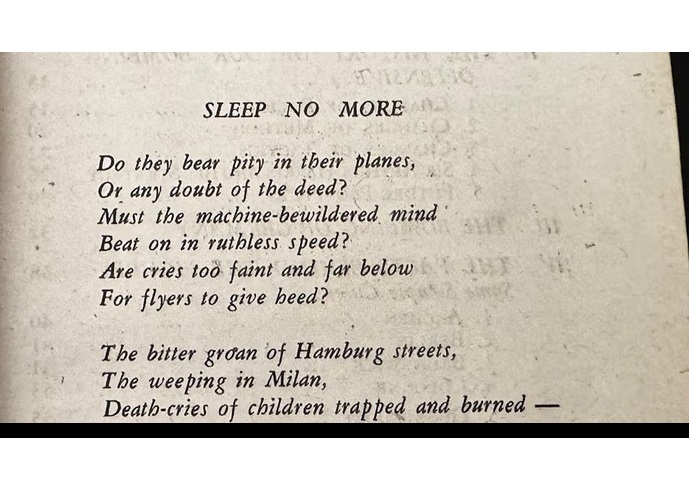
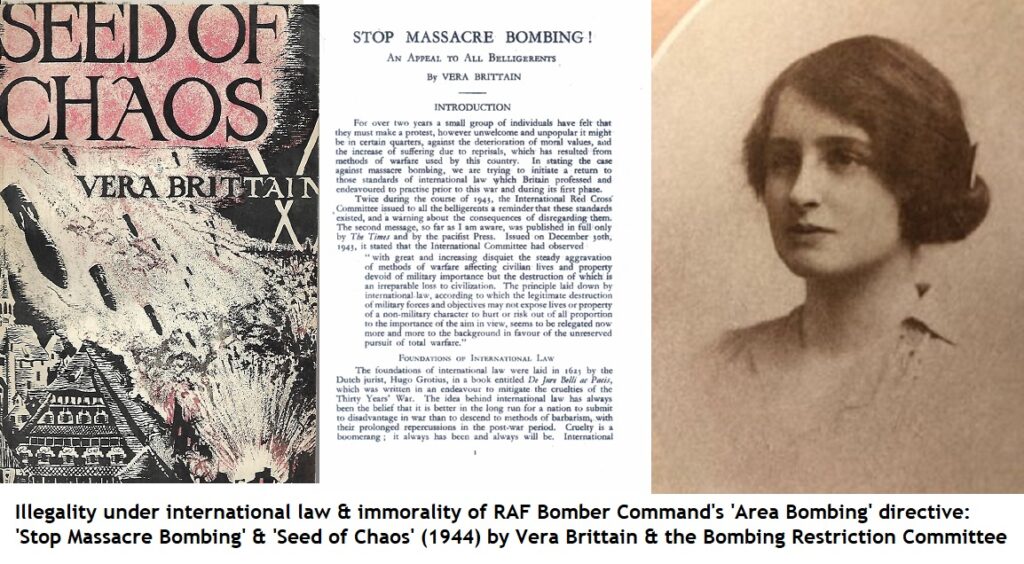
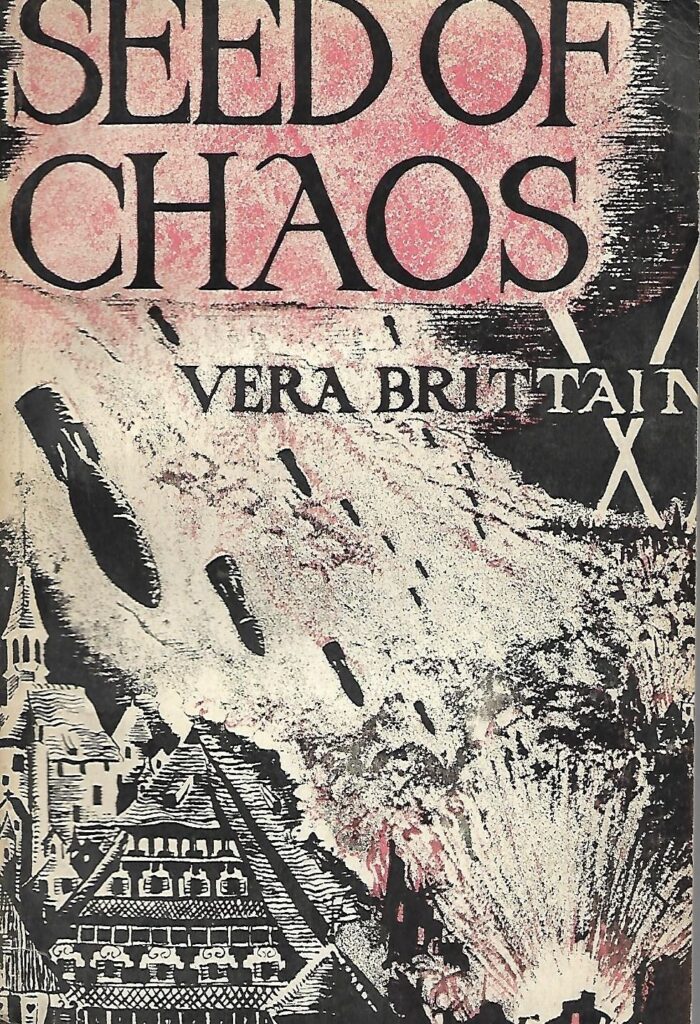 The Seed of Chaos – pamphlet by Vera Brittain on how mass bombing cities doesn’t work and is cruel. Seed of Chaos, Vera Brittain’s book, with poem, ‘Sleep No More’. [download pdf] In her 1944 book ‘Seed Of Chaos’ Christian WWI nurse and writer Vera Brittain warns against RAF Bomber Command’s ‘decent into barbarity’ which she says is laying the foundations for a future Third World War. ‘Among the majority at any rate, the desire for revenge and a hardening process – even If, for a time, it may be subdued by fear? Thus we are steadily creating in Europe the psychological foundations for a Third World War. Fourthly, the systematic destruction of German industrial power is hItting ourselves from a long-term standpoint. The prosperity of the Continent in the past has largely depended upon German industry, and the continental market, including Germany, was the best block of markets for the British export trade before the War. Mr Harcourt Johnstone, Secretary of the Department of Overseas Trade, said on 4th November, 1943, that in order to maintain our standard of lIfe after .the War, we should need to increase our export trade by £350 million a year ‘. The destruction of German industry means the destruction of the biggest British export market, and makes it more dIfficult, if not impossible, to prevent the lowering of the standard of life m Great Britain for many years after the War. !he second main argument brought forward to excuse our present policy of obliteration bombing is that we too have suffered – as indeed we have – and that therefore we are fully entitled to pay back what we have endured. . Mr George Bemard Shaw has dealt characteristically and drastically WIth this double contention in a recent letter to the Sunday Express (November 28th, 1943): !he blitzing of the cities has carried war this time to such a climax of infernal atrocity that all recriminations on that score are ridiculous. The Germans will have as big a bill of atrocities against us as we against them If we take them into an impartial international court. there are three further replies which should also be carefully considered by all rational people. In the first place, investigations into the origins of civilian bombing far from the fighting lines (as distinct from the bombing which forms part of a military campaign) make clear the difficulty of justly assessing. wIth who~ lays the fault of starting it. The cumulative growth of ciIvlian bombmg to Its present nightmare stage seems, on present inforrmatlon, to be an outstanding instance of the tragic fashion in which war-time cruelty grows like a snowball by its own momentum once the power of Juggernaut has taken control. Some accidental violatIon of international law, assumed to be deliberate, is repaid by a reprisal in kind . The enemy ‘hits back’; we retaliate harder still; in each case the accidental consequences (such as the bombing of a church in mistake for a factory) are advertised for propaganda purposes by the victim as having been intentional. So the grim competition goes on, until the mass-murder of civilians becomes part of our policy – a descent into barbarism which we should have contemplated with horror in 1939. Secondly, it is a fact – as this book will show – that though parts of Britain suffered cruelly in the Blitz, some of the terrible inventions and tactics now being used were not known or practised at that stage of the War. Even in those early days, the knowledge of our distress and confusion was limited to the areas which endured them, and particularly to the surviving victims and to Civil Defence and rescue workers, who had actually to deal with the shambles to which German bombs reduced many humble homes. It is, I believe, the comparative rarity of first-hand experience among the majority of the British people which accounts for their supine acquiescence of obliteration bombing as a policy.’ My own experience is relatively small, but as a Londoner who has been through about 600 raid periods and has spent 18 months as a volunteer fireguard, I have seen and heard enough to know that I at least must vehemently protest when this obscenity of terror and mutilation is inflicted upon the helpless civilians of another country.’
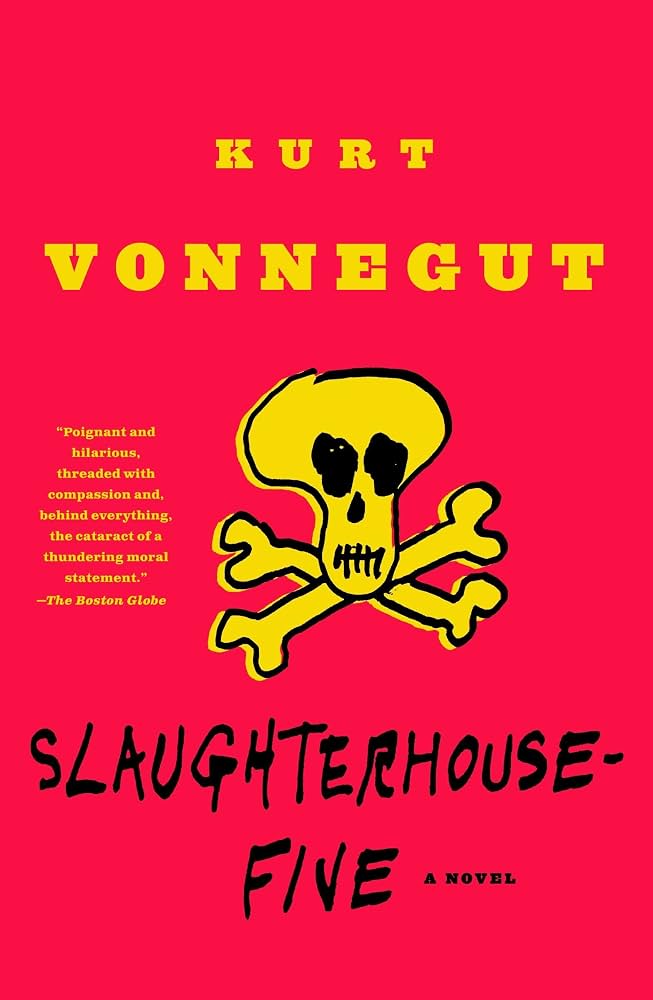 Slaughterhouse 5 novel about the RAF bombing of Dresden. Slaughterhouse-Five, or, The Children’s Crusade: A Duty-Dance with Death is a 1969 semi-autobiographic science fiction-infused anti-war novel by Kurt Vonnegut. It follows the life experiences of Billy Pilgrim, from his early years, to his time as an American soldier and chaplain’s assistant during World War II, to the post-war years. Throughout the novel, Billy frequently travels back and forth through time. The protagonist deals with a temporal crisis as a result of his post-war psychological trauma. The text centers on Billy’s capture by the German Army and his survival of the Allied firebombing of Dresden as a prisoner of war, an experience that Vonnegut endured as an American serviceman. The work has been called an example of “unmatched moral clarity” and “one of the most enduring anti-war novels of all time”. The book has been translated into at least 11 other languages, including German (twice), Italian (twice), French, Polish, Portuguese, Bulgarian, and Chinese. The novel’s first chapter begins with “All this happened, more or less”; this introduction implies that an unreliable narrator tells the story. Vonnegut utilizes a non-linear, non-chronological description of events to reflect Billy Pilgrim’s psychological state. Events become clear through flashbacks and descriptions of time travel experiences. In the first chapter, the narrator describes his writing of the book, his experiences as a University of Chicago anthropology student and a Chicago City News Bureau correspondent, his research on the Children’s Crusade and the history of Dresden, and his visit to Cold War–era Europe with his wartime friend Bernard V. O’Hare. In the second chapter, Vonnegut introduces Billy Pilgrim, an American man from the fictional town of Ilium, New York. Billy believes that an extraterrestrial species from the planet Tralfamadore held him captive in an alien zoo and that he has experienced time travel.
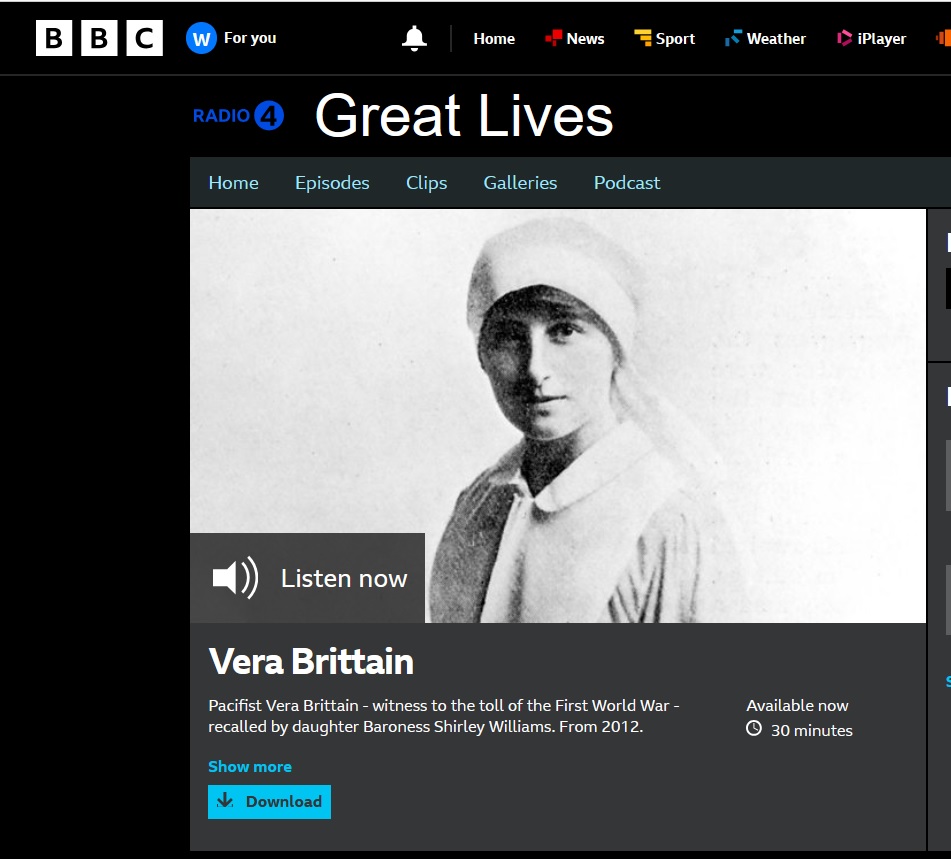 BBC 4 Extra – Great Lives – Shirley Williams on her Mum, Vera Brittain. Vera Brittain Great Lives The writer and pacifist Vera Brittain is discussed by her daughter Baroness Shirley Williams and Dr Clare Gerada, Chair of the Royal College of GPs. Vera Brittain’s life was shaped by the grief that followed the loss of her fiance, her brother and two good friends. She candidly conveyed the toll of the First World War on her generation in the best-selling 1933 book, Testament of Youth. Matthew Parris chairs an insightful exploration of what it was like to be brought up by Vera a mother who was, for many reasons, simply unavailable to the young Shirley Williams. Vera was a teenage feminist desperate for an education. But she turned her back on her studies at Oxford in 1914 because she felt compelled to serve as a nurse, wanting to join her brother and his friends in the trenches. Shirley Williams explains that as a result of her experiences, Vera became a committed pacifist, at a time when it was deeply unpopular to do so. Dr Clare Gerada nominates a fascinating life while paying tribute to two women – mother and daughter – who she believes have made the 21st century a better place for women to live. Produced by Mark Smalley. First broadcast on BBC Radio 4 in 2012.
Radio4All download pages
COMPLETE SHOW AND FULL INTERVIEWS [right click to download]
#1 – Complete 4hr show – [right click to download]
Full interviews with…
#2 – EXCLUSIVE Allyson Pollock Hancocks Care Home Massacre Covid Enquiry NHS privatisation – 00:20:00
#3 – Dangers of anti-psychotic anti-depressant drugs filmmaker Katinka Blackford-Newman – 01:00:00
#4 – Vera Brittain WWI WWII pacifist writer and nurse RAF obliteration of German ciies Great Lives BBC 24Jan12 – 00:30:00
#5 – Ex-Swiss intel Jacques Baud on the European Resistance and debanking Ian Proud Peacemonger – 01:00:00
#6 – Loyalist paramilitary hitman Allan Nesbitt linked to Conservative party and Turning Point UK Al Jazeera investigation – 00:10:00
#7 – Race murder victims spied on, raped by the state, Sex Lies and Spies, Unrepentant, Spycop Andy Coles ‘Davey’ wrote life hacking manual – 00:30:00
#8 – Dominic Cummings Cabinet Secretary responsible for civil service appointments and failures Lords evidence – 01:30:00
#9 – Mehdi Hasan, How Many Israelis Were Killed BY ISRAEL on October 7th – 00:20:00
#10 – Neil Oliver interviews Alex Krainer TERROR unleashed the maggot is making a cocoon what will emerge – 01:15:00
#11 – RAF Bomber Command 1939-1945 Dr Robin Clifton documentary (1998) – 00:45:00


The Bristol Politics Show CANCELLED and attempts to intimidate us
 July 2024 – Tony, Dave and Martin’s NOT The BCfm Politics show was CANCELLED/EVICTED from their PRSC studio in a no fault, no notice, no appeal, eviction by Chloe Slater of The People’s Republic of Stokes Croft (PRSC) arts centre – An email from Chloe and Keith Cowling explained that: ‘Transphobic’ leaflets, which we were not shown, had been left in the building by a recent guest (who denied it) making Transsexual users of the building feel ‘offended’ and ‘unsafe’. To quote: ‘Please let us know when you or Dave would like to come and retrieve your equipment and drop off your keys. Kind regards’ PRSC Directors (Keith Cowling, chair) PRSC / Stokes Croft China 17-35 Jamaica St Bristol BS2 8JP. Chloe Slater (formerly young man Jez and now self-defined as ‘she’) also made it difficult for us to retrieve the last of our equipment by inferring we couldn’t be trusted, we were made to wait in the cold outside their building for over 30 minutes to return their mixing desk and retrieve our remaining kit in December 2024.
 [UPDATE channel restored by YT in July 2025] October 2022 – Tony’s Public Enquiry Channel opened in March 2008, with 13 million views, over 1,600 videos and 26,000 subscribers is removed under false pretences by YouTube – A video Tony recorded in New Zealand ‘Bill Gates, ID2020 & Revelation: Quaker Tony Gosling on Covid 19 & the Bible’ and uploaded on 8th April 2020 got a ‘third strike’ but YouTube’s ‘medical misinformation’ regime was introduced in September 2021 so should not have included as ‘strikes’ videos uploaded before that date. Documentary makers are just about the only public interest investigators left in the NATO zone. From the top down, our mainstream media, police, political parties & intelligence services are being compromised by feudal banksters, secret societies and the mafia. Key people intimidated by psychopathic black magic types and their pliable drones who will even kill to take over positions of power? Just search for “John Scarlett” and “Dodgy Dossier” and you’ll see what I mean. The Zionists are every bit as fundamentalist and twisted as the leaders and followers of ISIS. Register here and join us in the discussion as we wriggle free of the psychopaths, back to sanity http://www.911forum.org.uk
 March 2020 – BCfm’s weekly Politics Show presented by Tony Gosling with Irish Republican Labour activist Martin Summers was forced off FM, now online only by station manager Pat Hart. He decided the show should be ‘rested, due to the pandemic’ on 24 March 2020 and then refused to communicate at all when we requested to do the show remotely. Bristol Community FM (BCfm) charity ‘CEO’ Patrick Hart is a long-time personal friend of Bristol’s all-powerful right-wing ‘Labour’ mayor Marvin Rees. Pat Hart has a private property portfolio on the continent and also does Public Relations work for property speculators who are taking over community facilities such as Redfield Cinema. Now on Internet only NOT The BCfm Politics Show is available 17:00-c. 20:00 live on Fridays. Pat Hart replaced us with a dumbed-down student show repeating MSM stories called The Bristol Agenda. If you’d like to share your views on his deliberate dumbing-down and pro-Covid jab mismanagement you can contact UK broadcasting regulator Ofcom or BCfm board chair and the ‘Don’ himself, here.
 February 2019 – Ofcom complaint result: UKLFI exposed as creation of Israeli foreign ministry – Bristol Post article: BCfm cleared after being reported to Ofcom for anti-semitic conspiracy theories – It could have resulted in BCfm radio station being shut down if the complaint was upheld Tony Gosling reported to Ofcom by UK Lawyers for Israel after being accused of anti-semitism A Bristol radio station, which had one of its programmes reported for anti-semitism and racism has been cleared by Ofcom. The radio regulatory body received a complaint from “UK Lawyers for Israel’ over a show on BCfm radio, hosted by investigative journalist Tony Gosling. The weekly politics show, on the popular community radio station based in Easton, was reported for several allegations on a show which aired on November 23. Tony Gosling, who was a former BBC journalist between 1989 and 1993, has been producing and presenting ‘The Tony Gosling Politics’ show every week on BCFM radio for 11 years. They have released a statement which reads: “Whilst we are supportive of all our volunteer presenters, The Tony Gosling Politics Show only represents approximately ten percent of our political output content wise, and less than two per cent of our entire weekly output.” Mr Gosling’s programme looks at local politics and he interviews a range of councillors and MPs in the city. The show is also perhaps more well known for its alternative look at international politics, and he has a cult following online from across the world. Mr Gosling has made regular appearances on national media including the politics show with Andrew Neil on BBC One, and international channels such as Russia Today, Channel1 Russia, NTV, and recently for both Turkish and Lebanon TV.
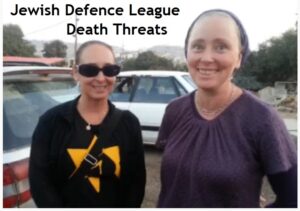 November 2012 – Tony gets death threats on the phone from the Jewish Defence League – ‘you’re a dead man walking’ – a man calls him and Tony records the call. Audio of UK Jewish Defence League (JDL) death threat against British journalist Tony Gosling (2012) – Avon and Somerset police Special Branch investigate, trace the caller, and after six months report to Tony that the individual has been served a caution that they will proceed with a prosecution for harassment under the 1861 offences against the person act. Seems pretty clear this death threat was issued alongside the lies, copied below, which were published on their blog by London based UK JDL in November 2012. Firstly Tony Gosling is not a ‘homophobe’. That accusation was first made in an article published by the ‘Harry’s Place’ blog, penned by Zionist David Toube and propelled by him anonymously into Private Eye in 2008. It refers to Gosling’s criticism of senior teachers at Bannerman Road Primary school in Bristol who used homosexual early learning picture books against the express wishes of the parent governors. His criticism was about the deception by teaching staff not because of the homosexual content of the books. Secondly, if you follow the JDL link you’ll find what Tony Gosling actually says about the ‘Protocols Of The Learned Elders Of Zion’ says “…I don’t think there is much doubt that the Protocols are fake…” Thirdly he is not a member of Bristol Palestine Solidarity Campaign and has never been to any of their meetings.
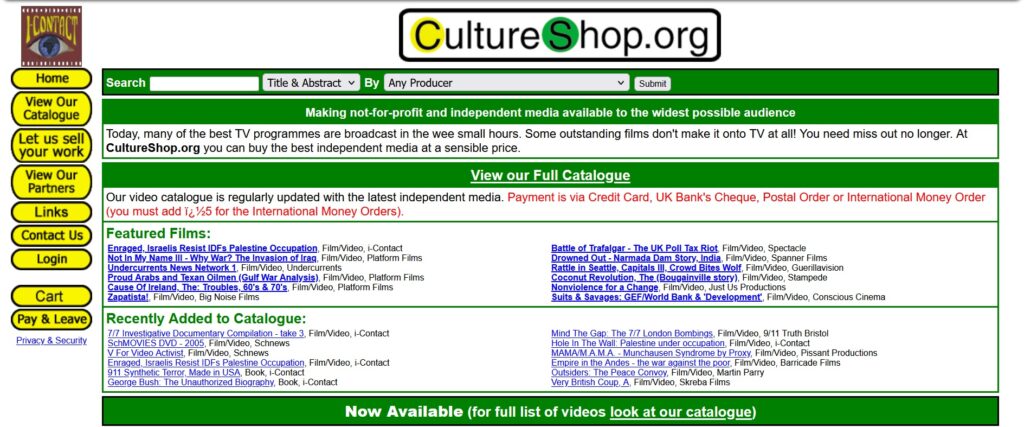 Autumn 2014 – Tony’s documentary production and distribution business shut down by its bank. Our thriving Co-op business bank account ordered closed for undisclosed reasons. Tony Gosling and Ben Edwards founded i-Contact Video Network to distribute documentaries on VHS video and DVD and to make their own documentaries as well as attend news events and sell video footage to TV news channels. Amongst the films we distributed were Operation Solstice, Coconut Revolution, Mark Purdey and Organophosphates, McLibel, 9/11 In Plane Site, Ludicrous Diversion and The Battle of Trafalgar. These, plus books, and even a board game about drug dealing ‘Dollars and Dibble’, were all available via mail order and we supplied libraries around the world too. The bank had clearly been ordered to investigate us for money laundering, although they never admitted it. All the questions they asked Ben and I were about proving our identity through passports etc.. When we did, yet more letters kept arriving demanding more proofs, birth certificates etc. and eventually when one of us missed supplying the required information, within a week or so of being asked, the account was summarily closed and we got a cheque made out to one of us with the few hundred pounds that was in the business bank account. Since neither of us could get a business bank account up and running for at least a few months and the bank account meant nobody could any longer use the website, we made the reluctant decision to shut it down. Thus was a thriving business killed off by the Co_operative bank. Having said that, co-op were not quite the worst. We did apply to open an account at Bristol’s ‘ethical’ Triodos bank, who proceeded to string us along for several months and then said our business was too risky for them to provide an account!
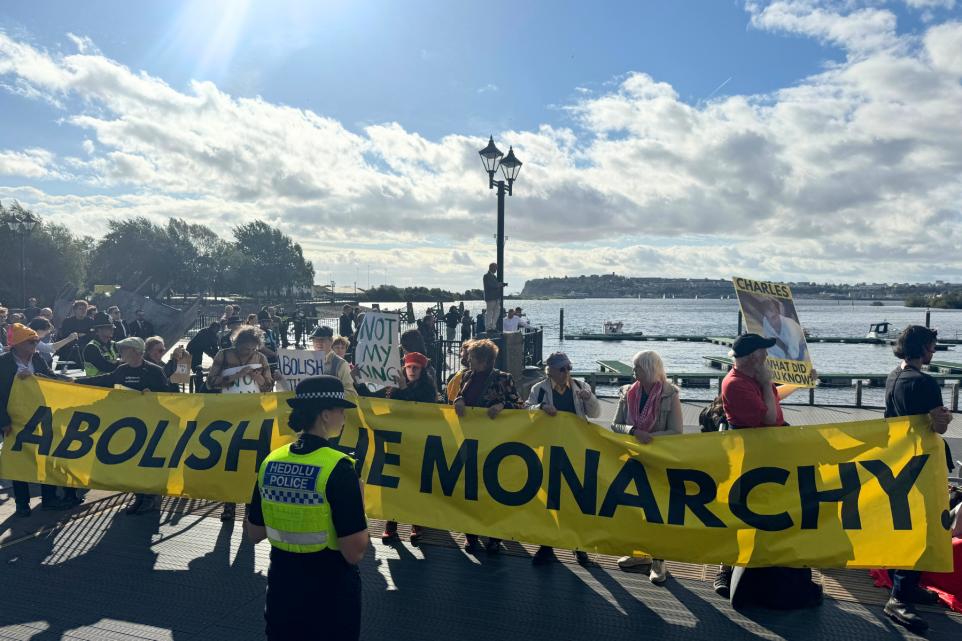
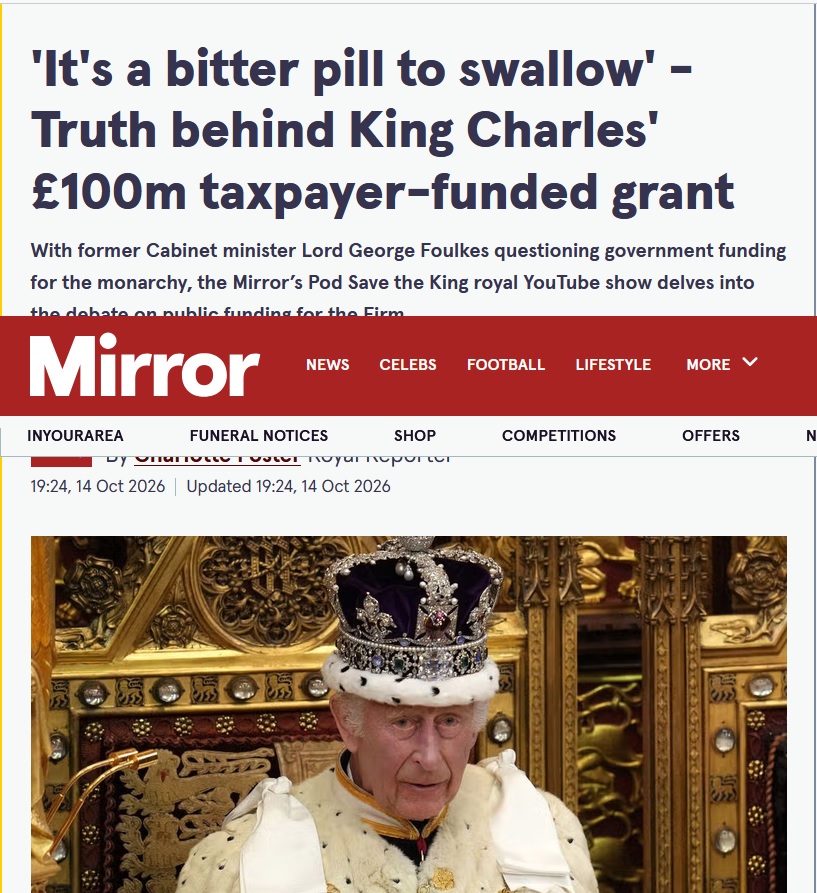
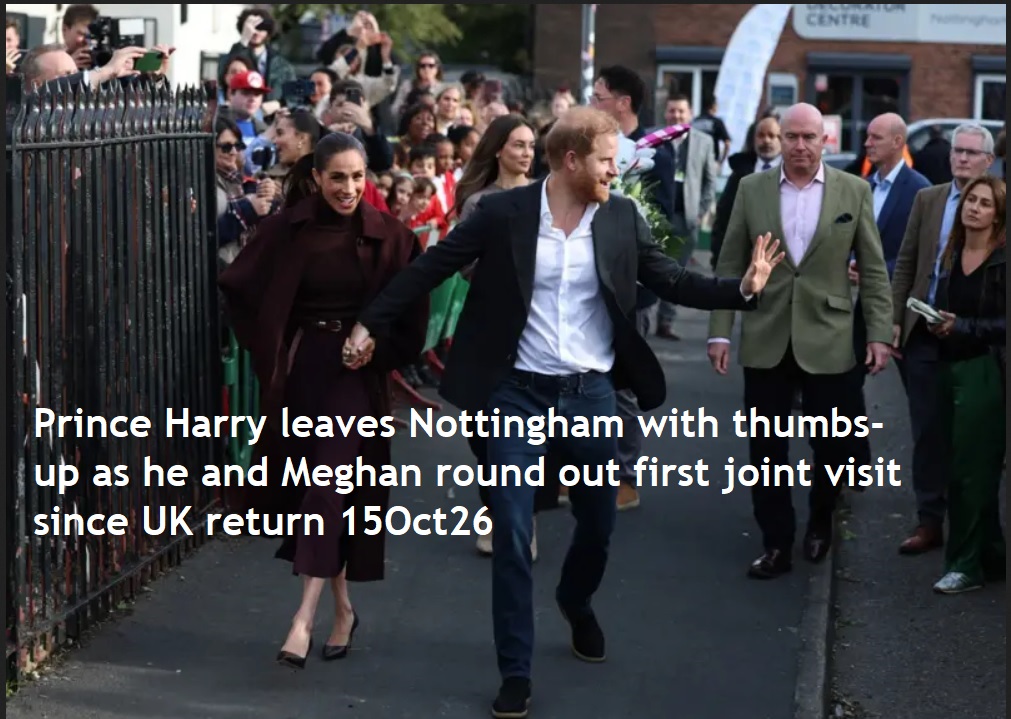

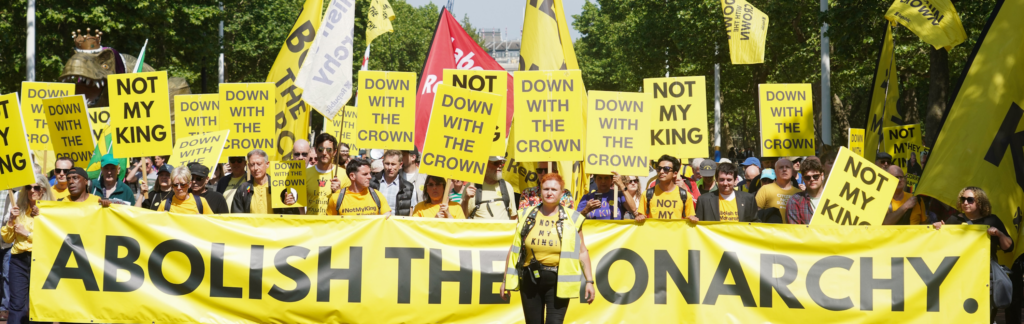





 One law for them… Footballer Omar Marmoush pays £400 fine for not insuring his £250,000 car. Don’t bother insuring yur £25ok car – you just have to pay a £400 fine! Man City’s Omar Marmoush fined over uninsured McLaren Omar Marmoush joined Tottenham on loan from Manchester City in August Tottenham striker Omar Marmoush has been fined after his McLaren supercar was found to be uninsured and not declared off the road. The 27-year-old, who joined Spurs on loan from Manchester City in August, was found guilty at Teesside Magistrates’ Court on 5 October.




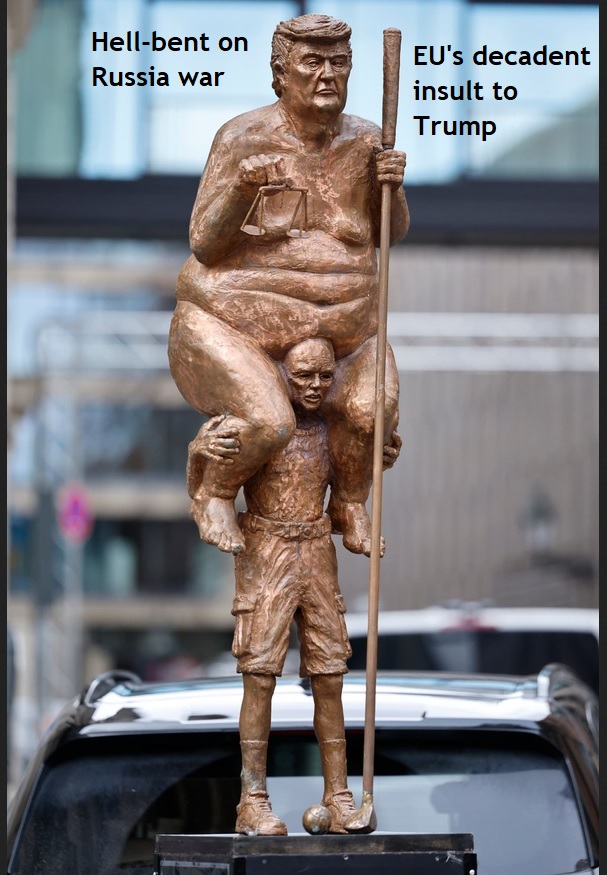 EU’s decadent insult to Donald Trump: Golden naked Trump statue in EU building. Naked statue of Trump named ‘Orange Plague’ unveiled at European Parliament The creator of the sculpture said it was a ‘satirical outcry’ against Trump’s volatile climate and foreign policies A gold statue depicting Donald Trump fully naked and perched on the shoulders of a much smaller man has been unveiled in the European Parliament building in Strasbourg.